Padayon UP reviews strategic direction, strengthens outcome-impact monitoring

| Written by Gerard Laydia

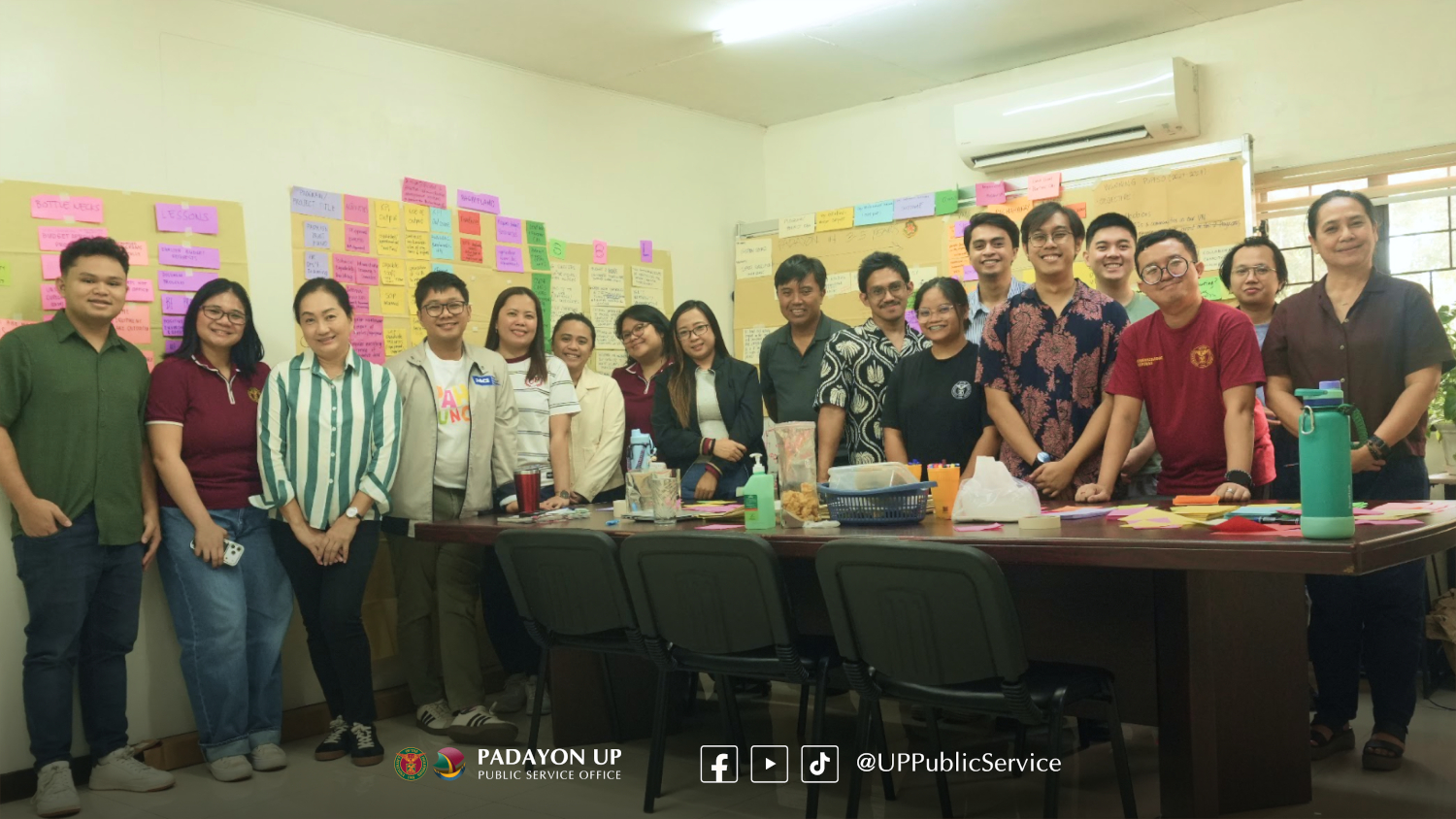
The Padayon UP Public Service Office held a strategic planning workshop and a series of Outcome-Impact Orientation (OIO) workshops at the Institute for Small-Scale Industries (ISSI), UP Diliman, to review its institutional direction and strengthen how it plans, monitors, and assesses public service initiatives.

Held on 19–20 October 2026, the strategic planning workshop brought Padayon UP staff together to examine the office’s strengths and challenges, and revisit its institutional roles, legacy, and strategic priorities.

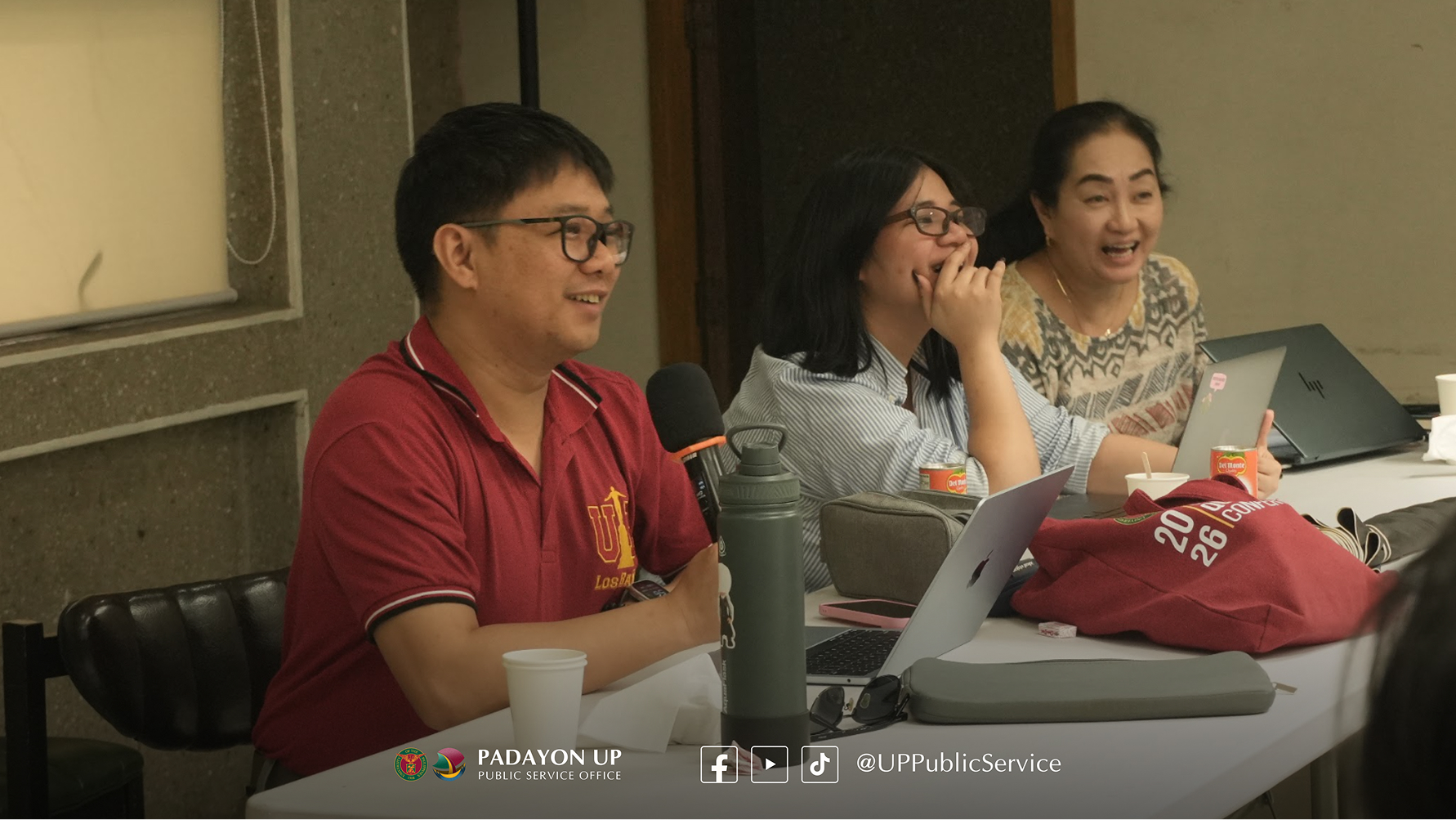
Associate Professor Paul Edward N. Muego of the UP Diliman College of Social Work and Community Development (UP CSWCD) facilitated the workshop. His expertise in community organizing, planning, and  participatory development provided a relevant foundation for the strategic planning discussions. He was assisted by Rex Marlo Varona, former Executive Director of the Asian Migrant Centre – Hong Kong and also an alumnus of UP CSWCD.

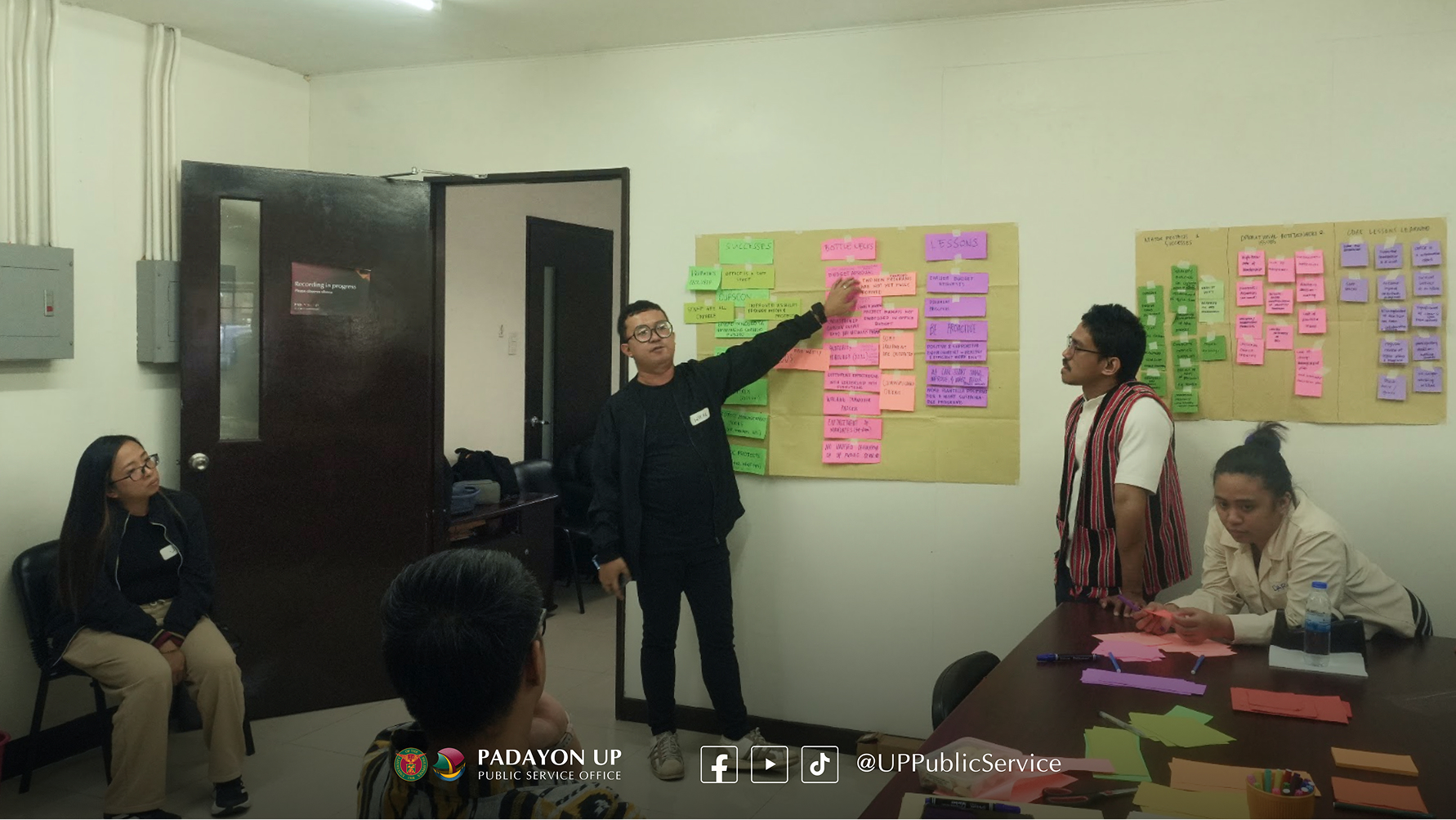
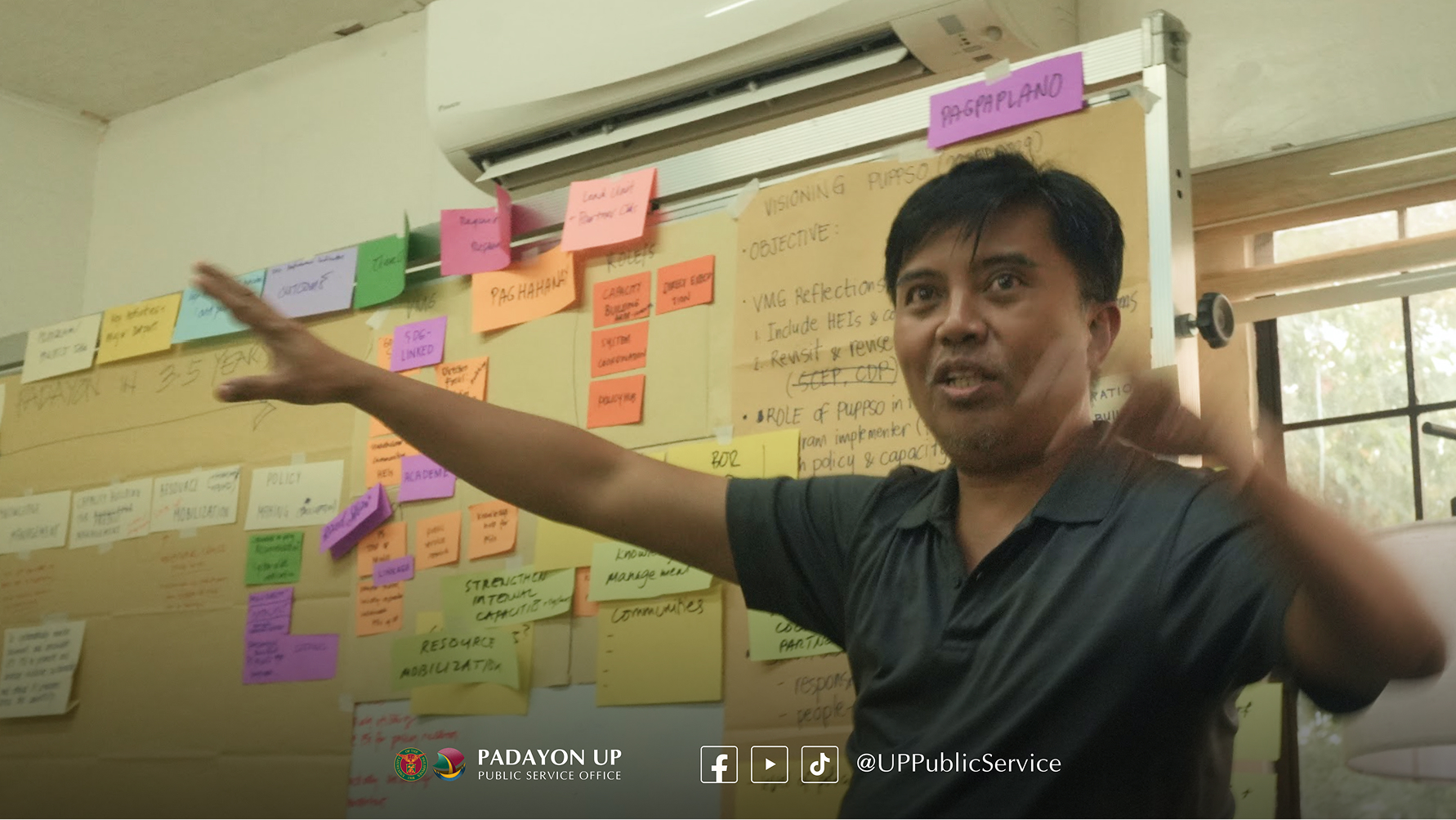
TAKING STOCK: A participant presents the group’s assessment of the office’s strengths, weaknesses, opportunities, and threats during the strategic planning workshop. (Photo: Ramon Carlos Garcia)

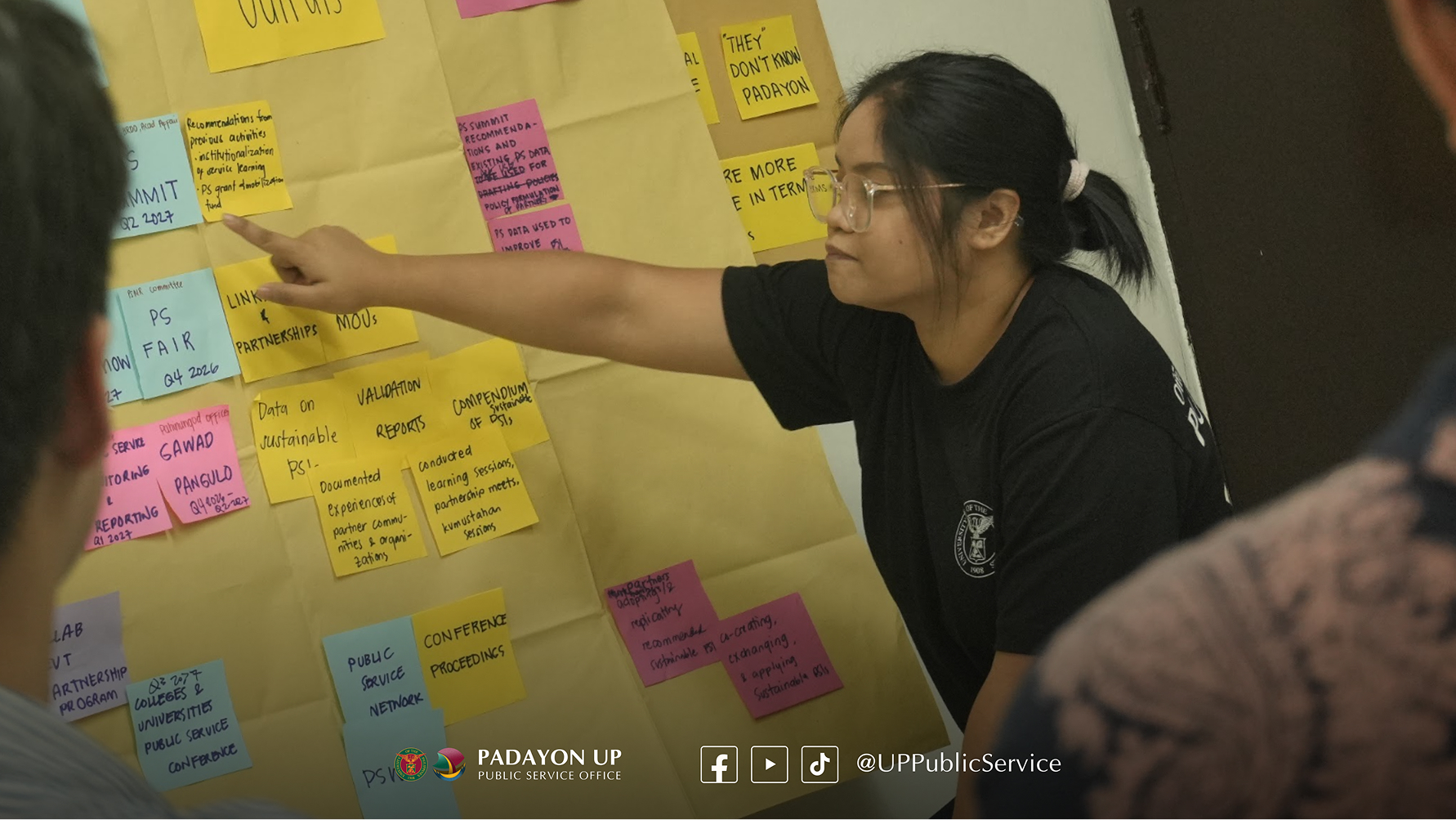
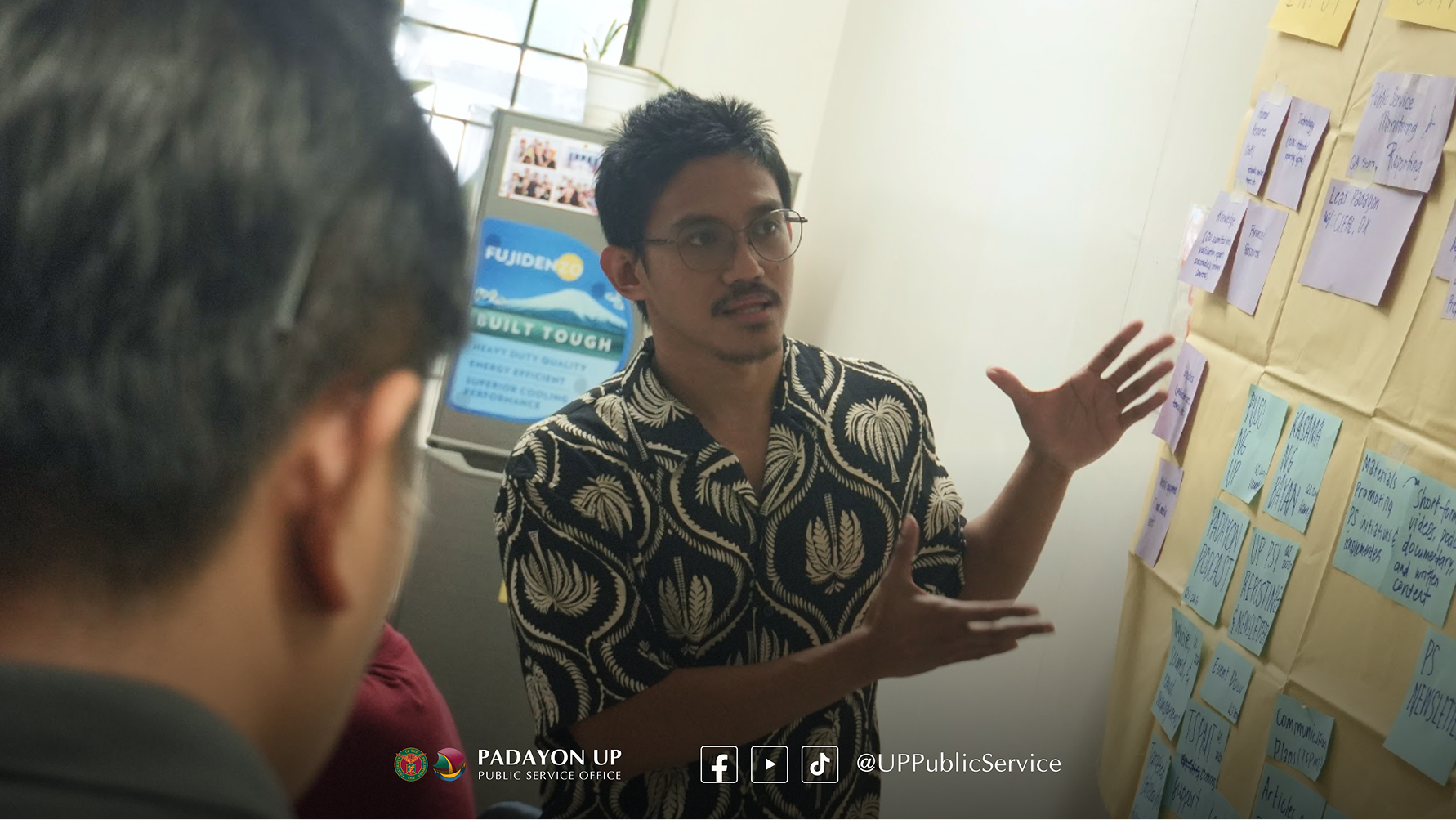
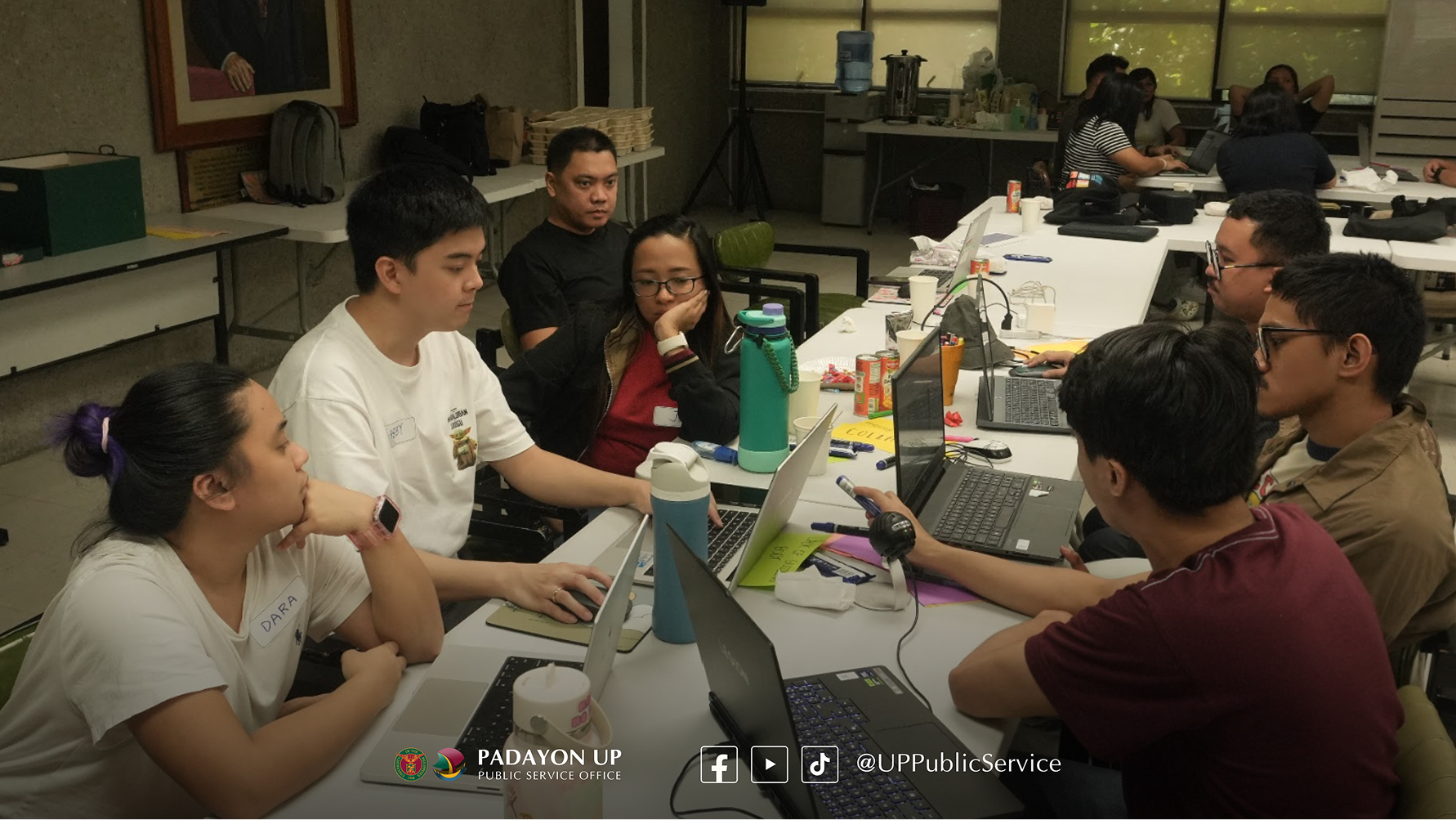
WORKING NOTES: Participants document their discussions on the office’s vision, roles, legacy, and strategic thrusts. (Photo: Ramon Carlos Garcia)

Centered on the core pillar “Public Service for the Common Good,” the strategic planning session laid out a proactive vision for Padayon UP over the next three years. As Director Maria Faith Y. Varona explained, the initiative marks a tactical shift away from ad hoc, short-term public service engagements toward sustainable, collaborative, and data-informed social development.

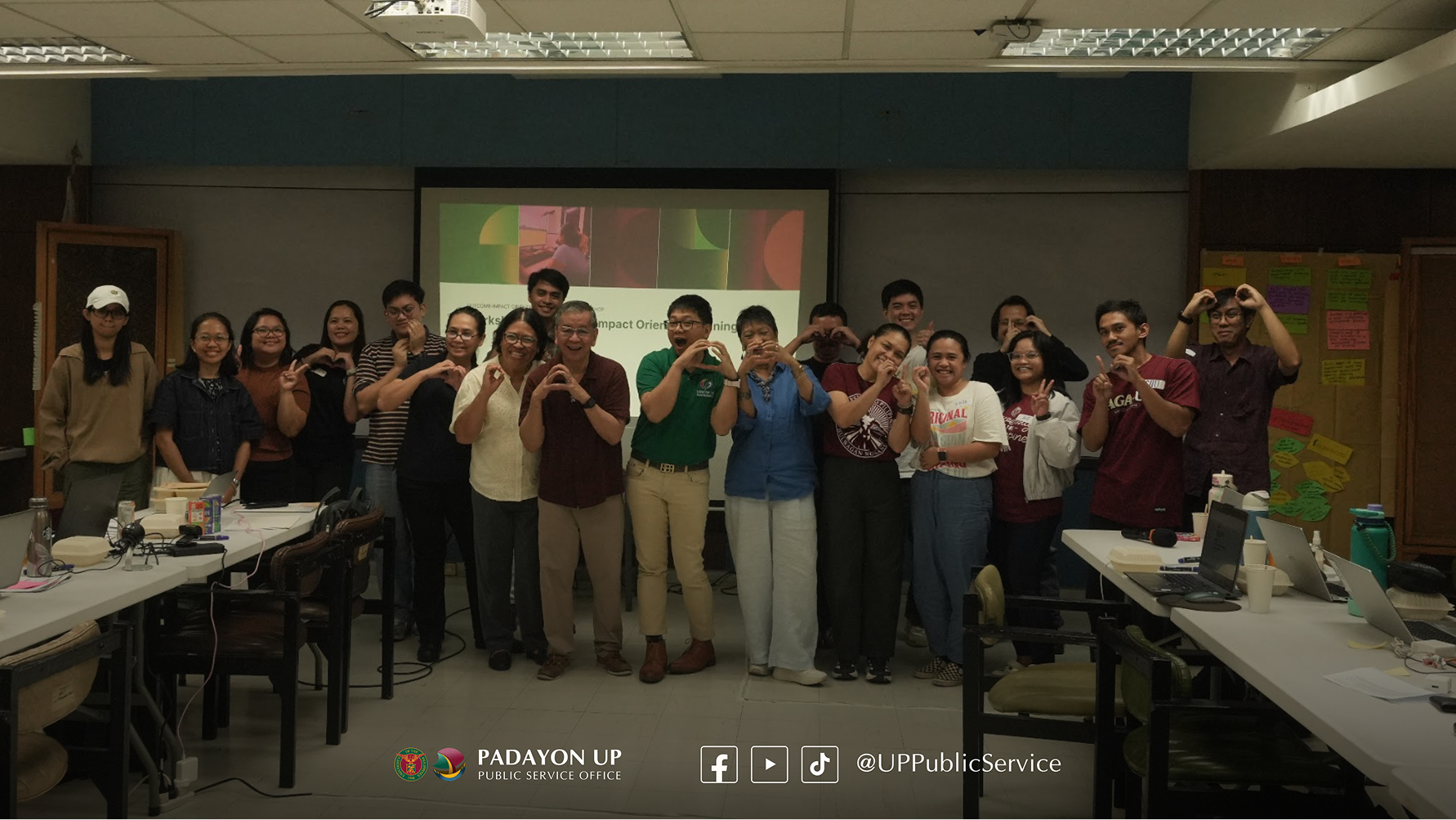
The planning workshop was complemented by the OIO workshops, which introduced participants to a change-oriented approach to designing and assessing public service projects. The first two modules were conducted on 27–28 August and 14–16 October, respectively, with Padayon UP staff and the UP System Ugnayan ng Pahinungód participating. The sessions were facilitated by Jane Bañez-Ockelford, Benigno D. Oliveros Jr., and Ma. Cristita Suelto-Chanyee of Facilitators of Learning for Change (FLC).

The sessions surfaced opportunities to improve existing practices, particularly in crafting plans in change language, consolidating baseline data, and systematically documenting outcomes. 

The third OIO module, scheduled for 10-12 November 2026, will focus on monitoring and evaluation, knowledge management, and good governance. Participants will develop monitoring and evaluation plans for their respective projects, including processes for gathering information and communicating results to partners and other stakeholders.

These activities form part of Padayon UP’s continuing efforts to strengthen its institutional capacity and support the University’s public service mandate through more deliberate planning, evidence-based assessment, and knowledge sharing.

Varona also emphasized the role Padayon UP aims to play in supporting UP units and partners in the coming years: “Through this framework, Padayon UP serves as a resource hub for public service information and data. It will bridge diverse stakeholders across the UP community while offering technical guidance and support in the co-development and delivery of impactful public service programs towards enhancing the quality of life of the Filipino public.”