UP showcases sustainability, inclusive initiatives at international forum
| Written by Ramon Carlos Garcia
The University of the Philippines (UP) highlighted its commitment to social responsibility beyond lectures and research by sharing its sustainability and inclusivity initiatives at the University Social Responsibility Network (USRN) Online Forum #6: Social Responsibility in University Operations on 25 February 2026 via Zoom.
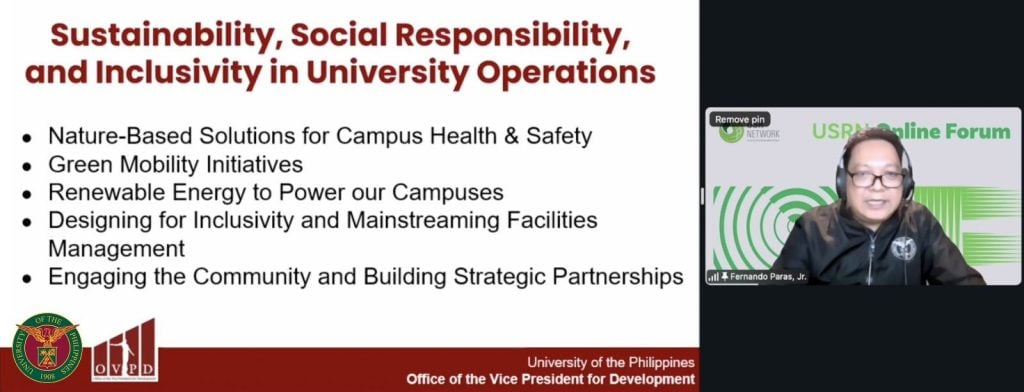
Dr. Fernando O. Paras Jr., assistant vice president for renewable energy, development, and management for southern constituent universities at the UP System, noted that these nature-based solutions have been progressively implemented across campuses over the years.
As part of the university’s long-term campus development and climate resilience efforts, the initiatives presented during the forum include green spaces, jogging and walking paths, and restorative areas designed to improve well‑being and manage flooding in the campuses’ nearby communities.
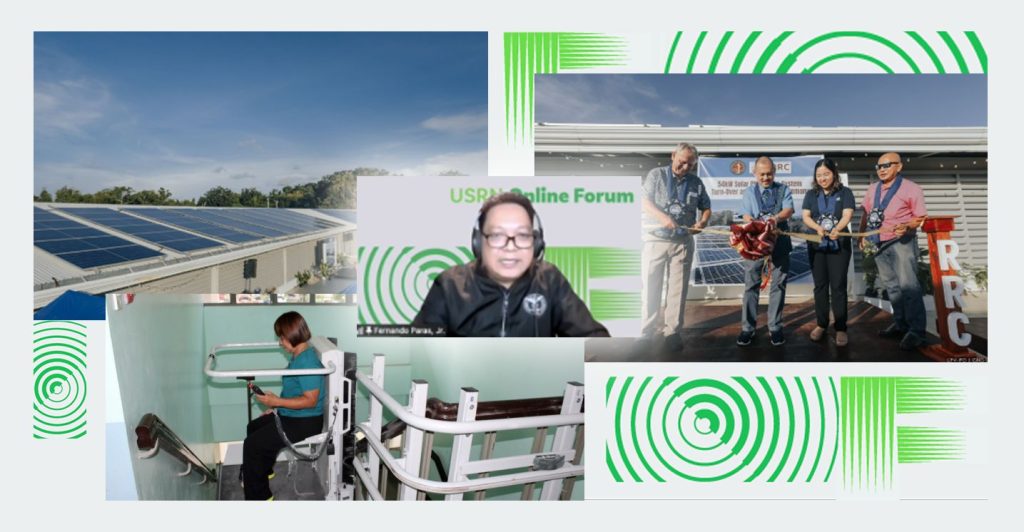
SUSTAINABILITY SPOTLIGHT. AVP Fernando O. Paras Jr. is the first speaker at the USRN Online Forum #6, where he puts the sustainability efforts of the UP System at the center stage
“Universities will increasingly be judged not only by what they publish but also by how they operate. Most powerful lessons we teach may not be delivered in a lecture hall, but they may be delivered through a solar-powered building, an electric mobility system, an accessible classroom, a well-maintained green space, and a partnership with the community.”
Dr. Fernando O. Paras Jr.
AVP Paras also highlighted UP Los Baños’ green mobility initiatives, citing the rollout of the solar-powered eLBEEP (Electric Low-Emission Bus for Environment and People) units and the TIPAKLONG e-trike program as key components of the University’s low-carbon transport strategy.
He also noted the expansion of bike lanes and the introduction of e-bike and scooter-sharing systems across campuses to promote active transport and reduce dependence on fossil fuel-powered vehicles.
Moreover, UP is actively moving toward net‑zero energy operations by installing solar photovoltaic systems in research stations, vertical farms, and academic facilities, with long-term plans to source all electricity from renewable energy.
SOLAR-POWERED FUTURE. UPV Chancellor Dr. Clement C. Camposano, together with UPV officials and partners, led the ribbon-cutting and activation of the 54kW Solar PV Grid-Tie System at the UPV Regional Research Center, marking a major step toward renewable and sustainable energy use (Gian Genoveza / UPV-IPO)
Dr. Paras emphasized inclusive campus design, taking into consideration persons with disabilities, gender equality, and religious practices and positioning facilities management as a strategic function critical to the university’s mission.
Access for All. The UP Los Baños College of Development Communication installs an electronic platform stairlift, the first of its kind in the UP System and the province of Laguna, advancing accessible and inclusive spaces for persons with disabilities, a project initially proposed in 2016 (UPLB Horizon)
Beyond infrastructure, the UP System also conducts the UP Sustainability Caravan, a systemwide initiative that brings workshops and dialogues on the Sustainable Development Goals to constituent campuses. This helps faculty, students, and staff integrate sustainability into teaching, research, and extension programs.
These UP’s sustainability and inclusivity initiatives reflect its broader Green UP action plan, which promotes biodiversity protection, green spaces, and sustainable campus infrastructure across all constituent universities.
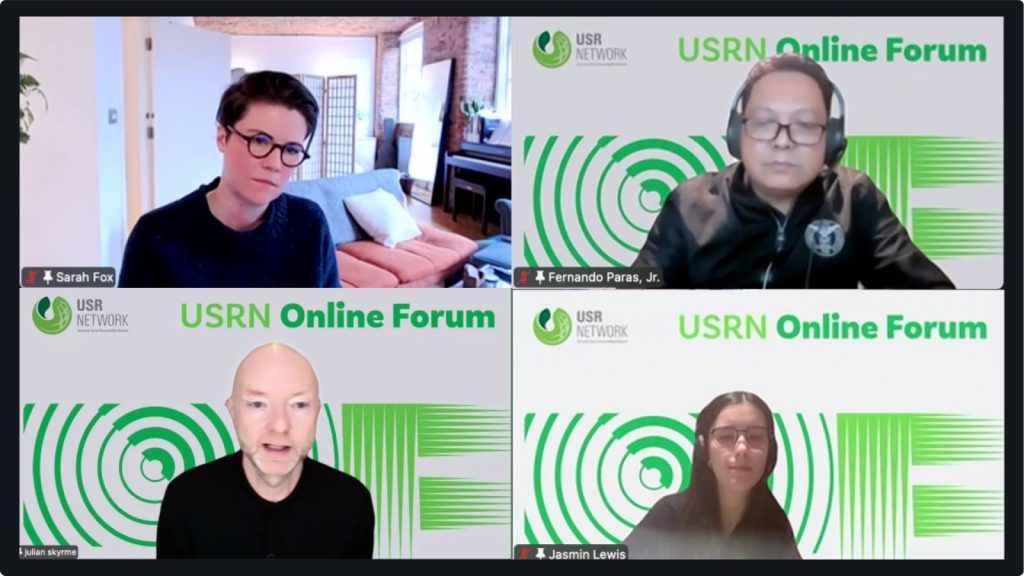
Other presenters included Ms. Jasmin Lewis, sustainable procurement manager at UNSW Sydney, who discussed sustainable procurement practices, and Ms. Sarah Fox, executive director for equality, diversity, and inclusion at the University of Manchester, who highlighted institutional strategies for embedding equity and inclusion.
Speakers and Moderator of USRN#6: From upper left - Ms. Sarah Fox, AVP Fernando O. Paras Jr., Mr. Julian Skyrme, and Ms. Jasmin Lewis
The forum was convened by the USRN, a global alliance established in 2015 to unite universities in addressing social challenges and promoting a more inclusive, peaceful, and sustainable world. It currently comprises 24 member institutions, including UP, across six continents.
These UP’s sustainability and inclusivity initiatives reflect its broader Green UP action plan, which promotes biodiversity protection, green spaces, and sustainable campus infrastructure across all constituent universities.
Other presenters included Ms. Jasmin Lewis, sustainable procurement manager at UNSW Sydney, who discussed sustainable procurement practices, and Ms. Sarah Fox, executive director for equality, diversity, and inclusion at the University of Manchester, who highlighted institutional strategies for embedding equity and inclusion.