There’s a new, faster way of searching through the University Library’s collection of materials with “Tuklas,” a web-scale discovery service that can search across the print and electronic resources of an entire library in real time.

“Tuklas” functions much like an online public access catalog or OPAC, where users can search through the various library resources such as books, academic journals, theses and dissertations, archival documents and articles from local newspapers and magazines.
“We want our patients to be able to go back to the lives they had before being critically ill.” This is the end goal of physiatrists in providing rehabilitative care and treatment, as emphasized by Dr. Celso Bate of The Medical City and the Victor R. Potenciano Medical Center, in the eleventh episode of UP’s STOP COVID DEATHS webinar series on July 3.

And that journey back is a long one.

In “Rehabilitation for Critical Care Survivors of COVID-19”, Bate clarified that because the disease is new, rehabilitative care and treatment protocols have yet to be established; but most helpful are existing strategies used in patients with prolonged confinement in the intensive care unit (ICU) and/or who are afflicted with acute respiratory distress syndrome (ARDS).

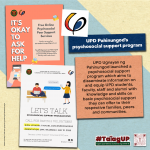
UP CoPES is the system-wide umbrella committee for various psychosocial support programs being implemented by Pahinungod in UP’s constituent universities. It has three working areas: kamalayan (awareness promotion); ugnayan (setting up referral mechanisms, partnerships, support); and, kasanayan (training volunteers who can, in turn, also train others).

With the Ugnayan ng Pahinungòd celebrating its first year of reactivation under UP President Danilo Concepcion, as the official volunteer service program of the UP System, Pahinungòd Constituent Universities can now also collaborate through UP CoPES to coordinate and improve the psychosocial aspect of their volunteer and public service efforts. Through this body, UP’s CUs may combine their strengths to provide swift, robust solutions to emergencies, as well as to share best practices in training and public service.

Experts believe that to fight COVID-19, the country needs to increase its testing capacity. To address this, a 2-part online lecture series dubbed as the UP TRAINS Projects (UP TRAINS) was recently designed by experts from the National Institutes of Health in UP Manila and the National Institute of Molecular Biology and Biotechnology in UP […]

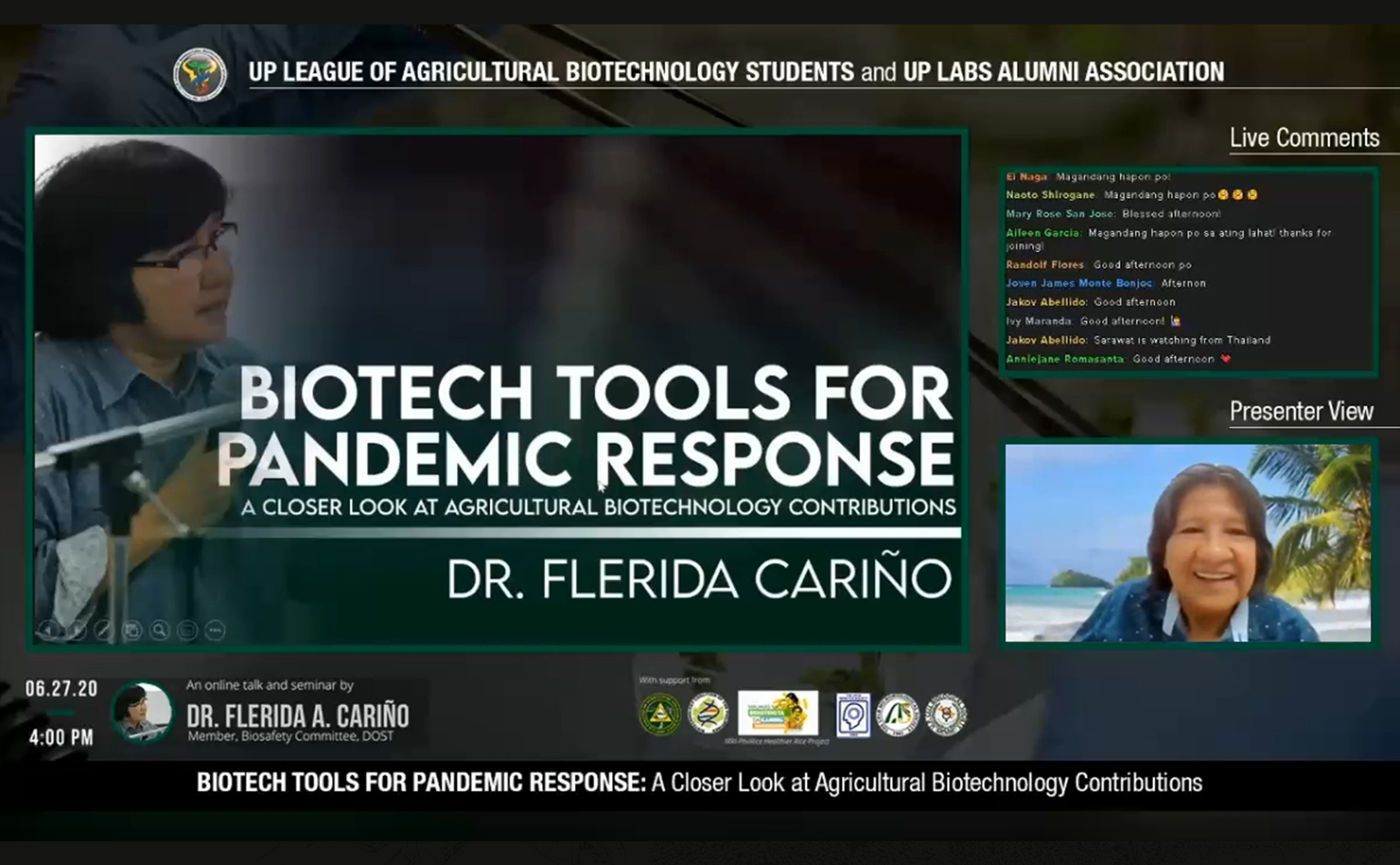
At first glance, the field of agricultural biotechnology (agri biotech) does not seem to have any relation at all to fighting a pandemic. But according to Dr. Flerida A. Cariño, professor of biochemistry at UP Diliman, agri biotech has a bigger role in countering the current COVID-19 crisis than most people realize.

She said that the techniques and tools used in agri biotech are the same ones used in molecular biology and biotechnology, a field that facilitates virus detection, disease management and treatment, and development of vaccines and therapeutics.

The UP COVID-19 Pandemic Response Team (UP PRT) launches new features in endcov.ph, a web portal created to provide the public with vital information and tools in the fight against COVID-19.

Since it’s launch in April, the UP PRT has contributed new resources to the dashboard including features that show Case Projections, the State of Transmissions in NCR based on LGU data, Municipal/City Density Map based on current active cases, and a Policy Sourcebook on COVID-19.

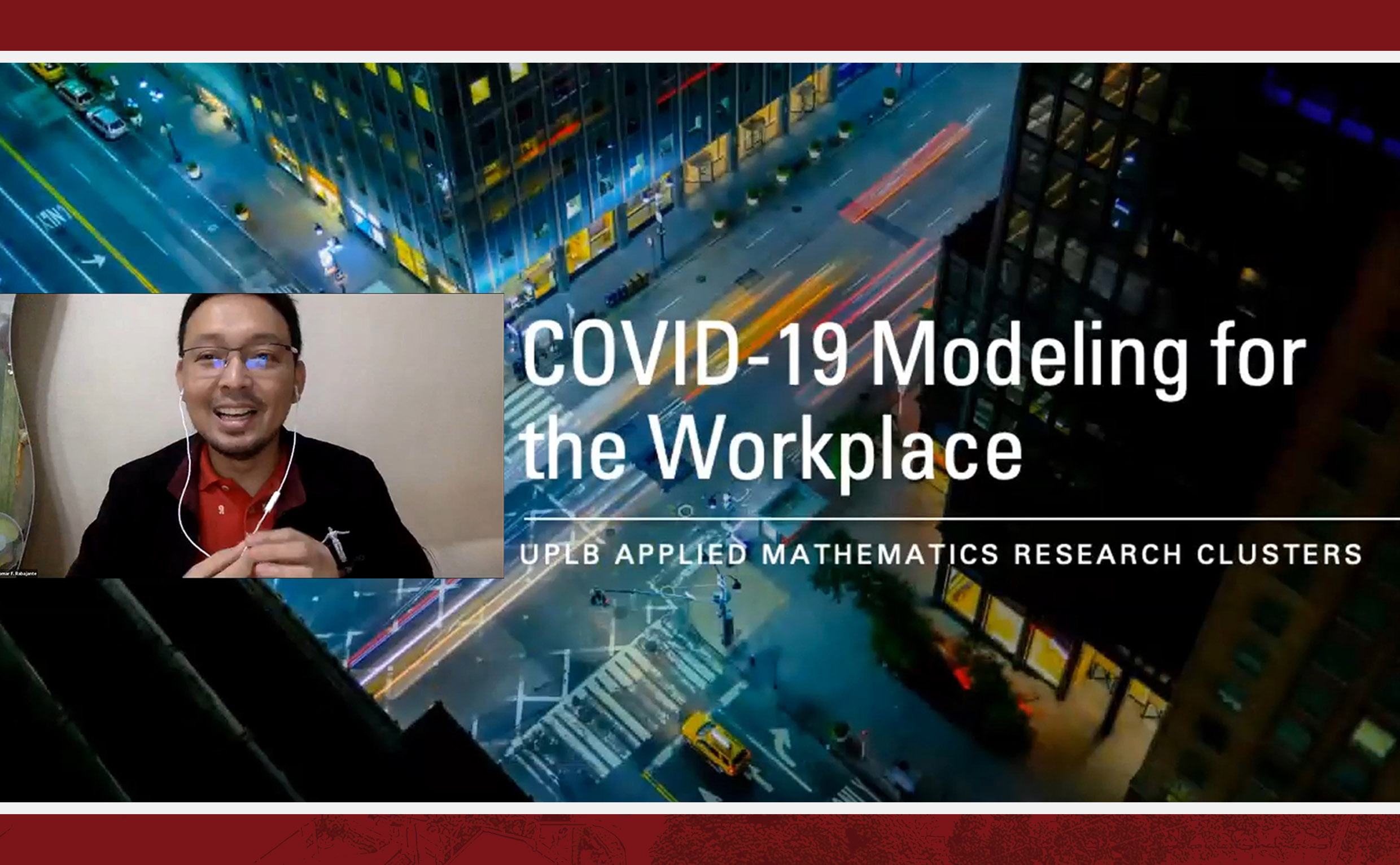
How risky are your job and workplace in this time of COVID-19 pandemic?

You can calculate this using job and workplace risk calculators developed by UPLB biomathematicians based at the Institute of Mathematical Sciences and Physics (IMSP) of the College of Arts and Sciences.

The two modeling tools called the Job Risk Calculator and the Workplace Outbreak Simulator, provide answers to these crucial questions in just a few clicks. These two platforms are free and can be accessed online.